 Italy for me From Italy with love


The Vasari Corridor (Corridoio Vasariano) is a world-famous gallery between the Palazzo Vecchio and Palazzo Pitti in the historic center of Florence (Firenze).
Page Contents
History of Construction
The 750-meter-long gallery was built by order of Cosimo I de’ Medici, the Grand Duke of Tuscany, in 1565. The purpose was to create a secret passage connecting the family residence on the west bank of the river, where the Medici family lived, with Palazzo Vecchio, which housed the government of Tuscany (Toscana). This secret route allowed movement without venturing into the city. The construction was timed to coincide with the marriage of Cosimo I’s son, Francesco I de’ Medici, to Joanna of Austria from the Habsburg dynasty. Thus, the construction was carried out in a very short time: the gallery, based on the architectural project by Giorgio Vasari, was built in just 5 months.
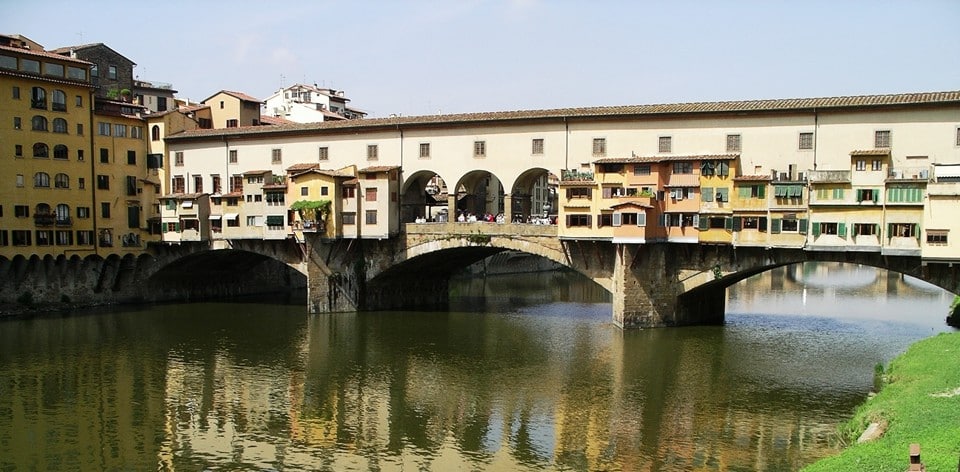
The Vasari Corridor features unique construction techniques:
- Part of the corridor runs wall-to-wall with the Church of Santa Felicita (Santa Felicita), where a window-balcony was made for Cosimo I to attend services without being seen by churchgoers;
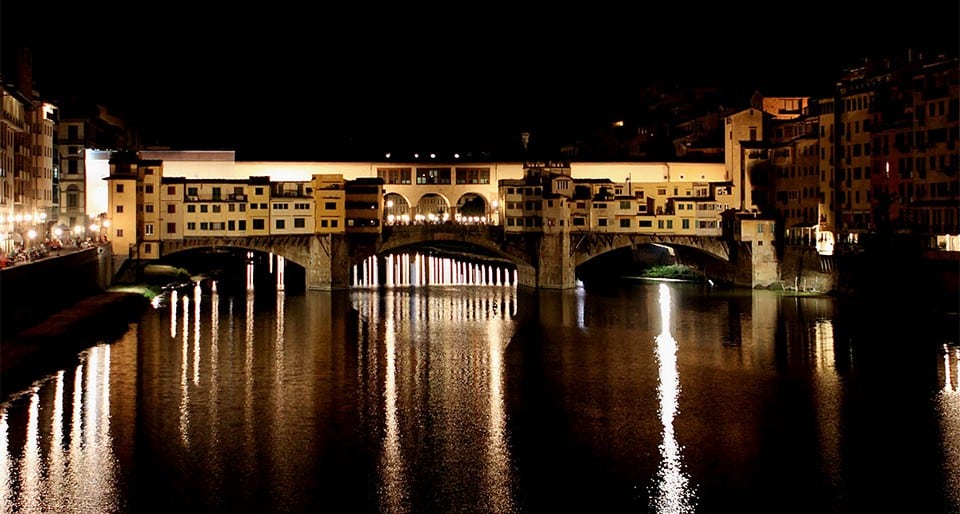
- The most famous section of the gallery is located on the Ponte Vecchio bridge and amazes with panoramic windows offering views of the Arno River up to the Ponte Santa Trinita bridge;
- During construction, jewelry shops replaced the fish and meat stalls on the Ponte Vecchio to avoid unpleasant smells and sights for high-ranking individuals.
Through the Medici Family’s Secret Passage
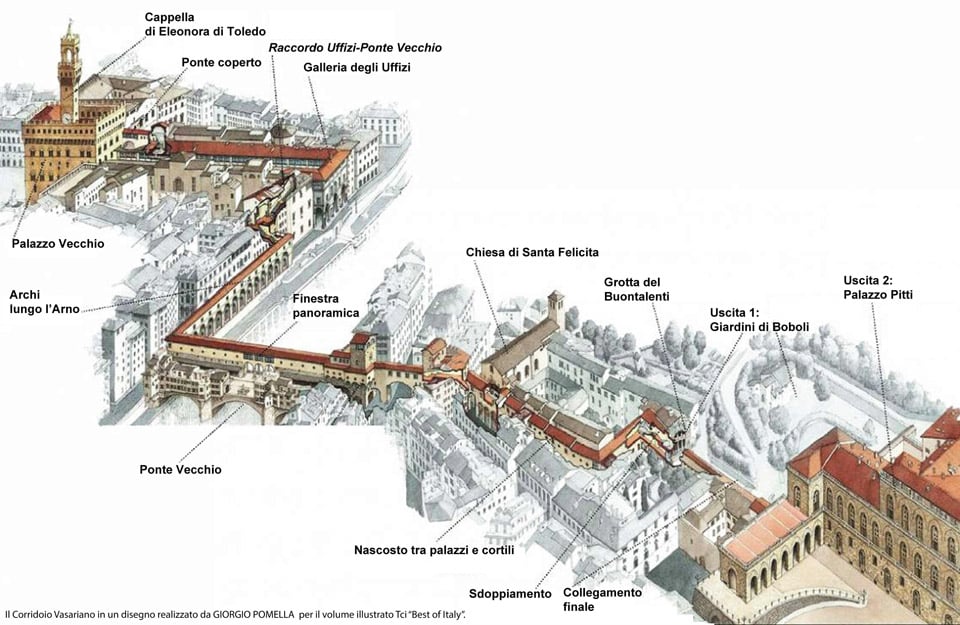
The corridor consists of several sections:
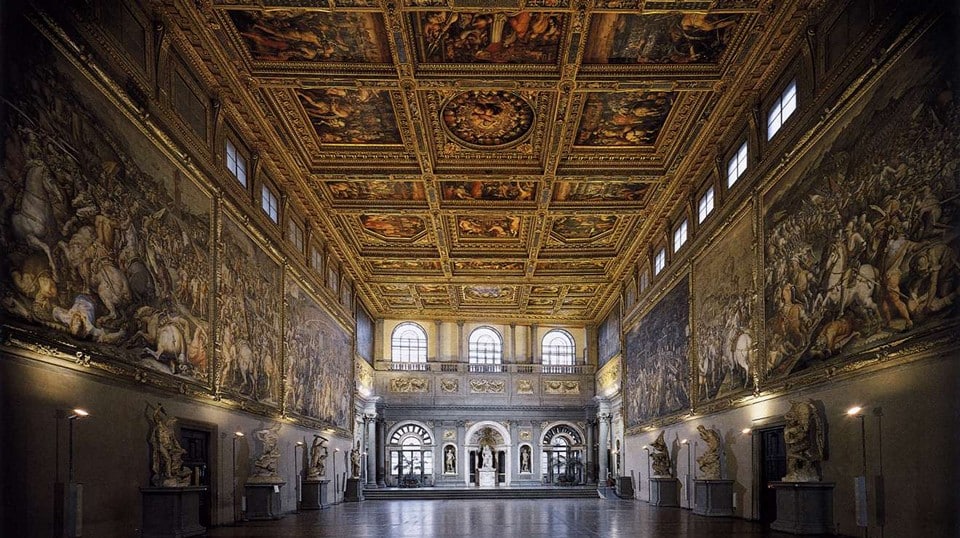
- From the Chapel of Eleanor of Toledo in Palazzo Vecchio to the “Hall of the Five Hundred” (Salone dei Cinquecento), decorated by order of Savonarola and transformed into a ceremonial hall by Cosimo de’ Medici;
- A passage with busts and portraits of the Medici family in the Uffizi;
- A section of the gallery, now only accessible to organized groups by special arrangement, recognizable by round windows with grilles, stretching along the embankment to the Ponte Vecchio – this is where the unique collection is housed;
- The corridor above residential and commercial premises on the bridge over the Arno;
- Passages above residential buildings on the west bank of the Arno and along the Church of Santa Felicita, then to Palazzo Pitti;
- A passage into the Boboli Gardens (Giardino di Boboli), adorned with fountains, grottoes, and sculptural compositions.
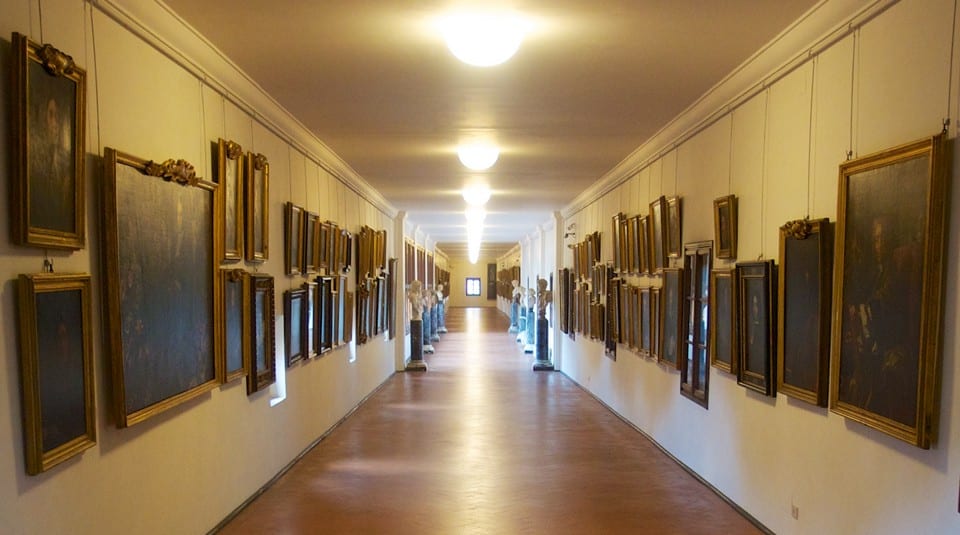
The Vasari Corridor in Florence has undergone numerous restorations, but its appearance has hardly changed. Only a few modifications have been made:
- In 1939, the windows were enlarged by order of Benito Mussolini;
- In 2013, a section dedicated to 21st-century artists’ self-portraits was added at the end of the covered corridor.
Today, the Vasari Corridor is part of the Uffizi Gallery.
Treasures of the Gallery
The Vasari Corridor houses paintings from the 16th and 17th centuries by famous artists from Rome (Roma) and Naples (Napoli). A special part of the collection is self-portraits by painters from Italy and other countries from the 16th to the 20th centuries:
- Giorgio Vasari;
- Raphael Santi;
- Peter Paul Rubens;
- Diego Velázquez;
- Orest Kiprensky;
- Boris Kustodiev;
- Ivan Aivazovsky;
- Marc Chagall, and others.
The collection of self-portraits is constantly growing: artists consider it an honor to donate their self-portraits to the Vasari Corridor.
The Vasari Corridor houses a collection of about 1,500 self-portraits and 700 other paintings. The uniqueness of the collection lies in the fact that, with rare exceptions, the originals are preserved here, providing a complete understanding of the master’s work.
The Vasari Corridor also represents another chapter in the history of art development: here are paintings damaged during the explosion near the Uffizi Gallery in May 1993. The fragments of the paintings, cut by shrapnel and mounted on blackboards, were decided not to be restored, gaining symbolic significance.
How to Visit
The exhibition in the Vasari Corridor is highly valuable, but due to the events of 1993, entrance to the museum is restricted. Until 2016, the corridor was open to tourists only a few days a year during national celebrations.
According to the new plan, the entire Vasari Corridor will become accessible to everyone and will be part of a route designed to accommodate 500,000 tourists annually.
Currently: until the end of 2024, group tours of the Vasari Corridor are not planned – access is closed as the collection is being redistributed to the Uffizi Gallery and other palaces. Special tours may be organized upon request; you can view all Florence tours here. Whether the Corridor will open this year or ten years later is unknown. We will keep you updated.
How to Get There
You can reach the Vasari Corridor in Florence by several means:
- On foot from the train station;
- By buses D, C1, and C3;
- By taxi.
The Vasari Corridor in Florence allows you to immerse yourself in the world of art and feel the atmosphere of the ancient city and its legendary inhabitants.