 Italy for me From Italy with love

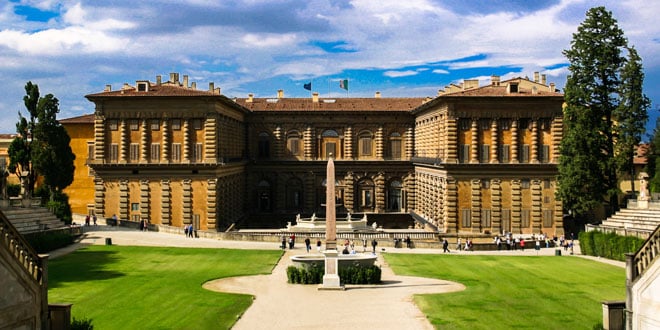
Strolling through Florence, cross the Arno River via the Ponte Vecchio. Then, take a leisurely walk along Guicciardini Street, and you will find yourself at Piazza Pitti. This square is home to one of Florence’s largest and most magnificent palaces – Palazzo Pitti. What is now a vast Florentine museum was once the residence of some of the greatest dynasties.
Page Contents
History of the Palazzo’s Construction
In the 15th century, the Medici family ruled Florence. Their affairs were flourishing, and they were well respected by the people. One of their most loyal friends was the Florentine banker Luca Pitti. However, it later turned out that his loyalty was feigned, and the true emotion that drove the wealthy banker was envy. This envy led him to organize a conspiracy against the ruling Medici family in 1458.
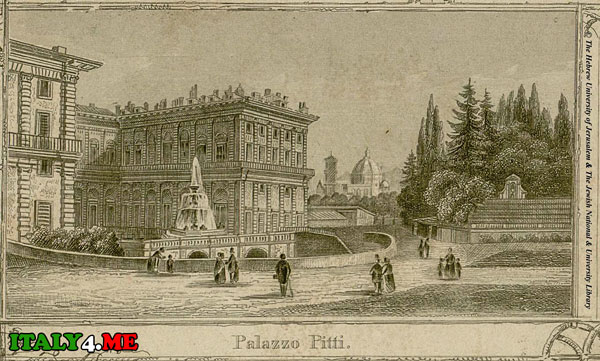
At the same time, to demonstrate his superiority, Luca Pitti began constructing a palace. The new palazzo was intended to surpass any of the Medici homes. According to some historical documents, Pitti commissioned an architect to design a palace whose courtyard could contain the entire Medici palace, with windows the size of the Medici doors.
It was initially believed that the project was assigned to the best architect of the time, Filippo Brunelleschi (1377-1446). However, historians now tend to believe that the idea most likely belonged to his student, Luca Fancelli. This is supported by certain architectural differences and the fact that Brunelleschi had already passed away at the time the construction began.
The scale of the new construction was astounding. To find enough labor, everyone who could be useful was hired, including wanted criminals and exiled individuals. Despite the grand scale, the Pitti Palace could not compare to the serene majesty of the Medici residences.
Over time, the prosperity of the Pitti family began to decline, especially after the death of their patron, Cosimo de’ Medici. Due to the Ottoman Empire’s advances, European trade was in a precarious state, causing many once-wealthy families to go bankrupt. In 1464, construction on the palace halted due to a lack of funds. Luca Pitti himself died in 1472 without seeing his project completed.
Completion of Construction
Despite the country’s difficult situation, the Pitti family managed to retain some influence and continued to live in the unfinished palace. In 1537, Cosimo I reclaimed power in Florence, becoming the Grand Duke of Tuscany. In 1549, Cosimo I bought the palace from Luca Pitti’s impoverished descendants and gifted it to his wife, Eleanor of Toledo.
To move into their new property, the Duke and his wife decided to expand it. The original design was used as a basis, with the building significantly expanded on the backside, nearly doubling its area. The interior space of the palace was divided by semicircular arches with pilasters. The final structure was 205 meters long and 38 meters high.
In 1565, by order of the Duke, architect Giorgio Vasari designed and built a corridor connecting Palazzo Vecchio, where government meetings were held, to Palazzo Pitti, where the entire Medici family planned to move. The covered passage also goes through the Uffizi Palace and Ponte Vecchio. Part of the bridge over the Arno is fitted with large windows offering beautiful views of the river. This closed corridor allowed the Duke and his family to move easily and safely. The structure later became known by the name of its creator, Vasari.
Boboli Gardens
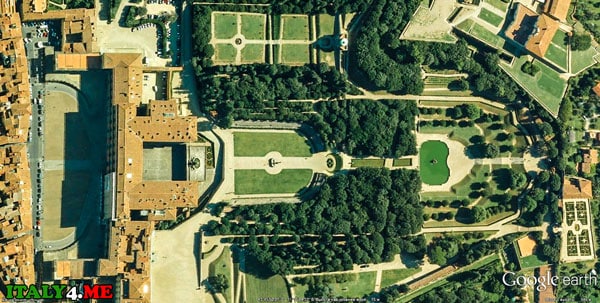
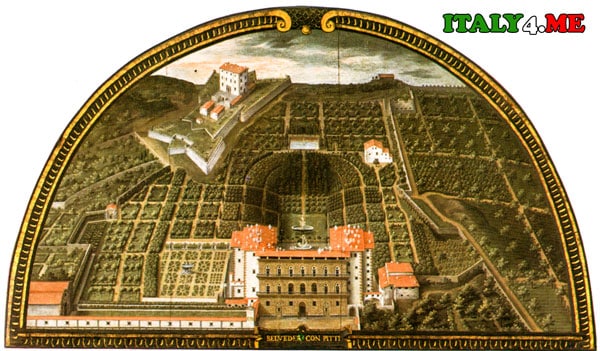
The land behind the palazzo was also purchased. Later, it was transformed into a park, now known as the Boboli Gardens. The park’s layout was initially designed by Niccolò Tribolo, and after his death, the project was taken over by Bartolomeo Ammannati. Giorgio Vasari, Bernardo Buontalenti, and other well-known architects also contributed to the creation of the garden complex.
The park is an example of Renaissance garden design. Straight, greenery-covered alleys lead to secret grottos, while trees are harmoniously accompanied by statues and fountains. The central feature of the park was the horseshoe-shaped amphitheater, where all festive events and various ceremonies were held.
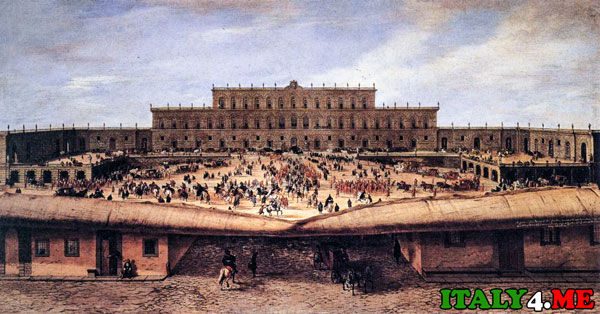
Over time, the influence of the Medici waned. The palaces and titles continued to be passed down, but the Medici line ended in 1737. The palace then became the property of the Duke of Lorraine. However, this did not last long. After Napoleon’s conquests, the palace was briefly under French control. In 1860, the palace, along with the Tuscan province, came under the rule of the House of Savoy. From 1865 to 1871, during the Risorgimento, the Pitti Palace was home to King Victor Emmanuel II of Italy. In 1919, his grandson nationalized the palace, gifting it to Italy.
After nationalization, the Palazzo and the adjoining Boboli Gardens were divided into several museums and art galleries, housing original artworks and various artifacts owned by the state. Approximately 140 rooms are open for public viewing, most of which were furnished in the late 17th and 18th centuries. During a 2005 renovation, several secret bathrooms dating back to the 18th century were discovered, preserved in their original condition.
Architecture
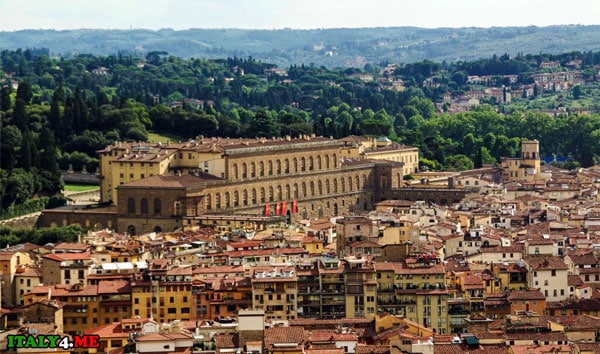
The Pitti Palace embodies the vision of Renaissance architecture. It is a cube, equal in height and depth, covered on the outside with rough rustic stone. The building has three floors. The first floor features three large entrance doors, while the second and third floors have seven windows each. The windows are connected by a long balcony, and there is a loggia built under the roof.
The Pitti Palace is not only one of the largest Florentine palaces but also the most impressive. The use of rough materials for the façade, first implemented by architect Michelozzo in the Medici-Riccardi Palace, is taken to the extreme here. Each of the three floors is over 10 meters (32.8 feet) high, making the building unusually tall for its time, further elevated by its natural height. The large rough golden stones used for the cladding and the windows, which resemble round doorways, completed the original exterior look.
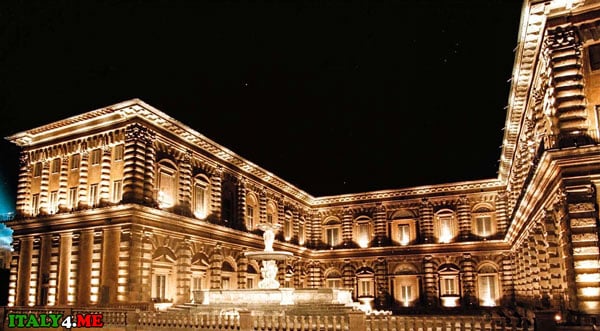
After the first renovation ordered by Cosimo Medici, the palace’s exterior changed somewhat. The side doors were transformed into large floor-to-ceiling windows. A wide staircase was added, leading directly to the second floor. The façade’s length was nearly doubled due to two additional extensions. The most significant change made by Ammannati was the inner courtyard, which is still considered the most beautiful Renaissance courtyard (Cortile dell’Ammannati). The walls facing the courtyard alternate between smooth and rough textures. The courtyard columns resemble rough, gnarled tree trunks, emphasizing the blend of art and nature.
One of the walls features a fresco painted in 1599 by Giusto Utens. It depicts the Pitti Palace as it looked in the late 16th century, resembling both a city palace and a country residence.
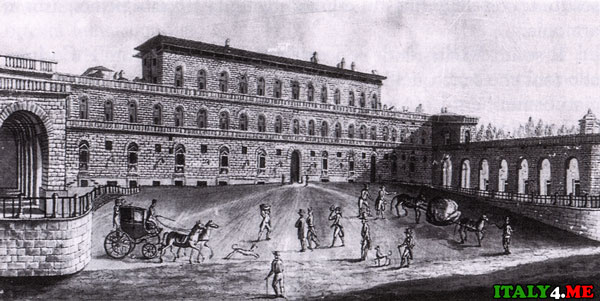
The last major changes occurred in the late 18th and early 19th centuries. The architects of the Lorraine Dukes, Ruggeri, Paoletti, and Poccianti, added two semicircular wings to the building’s sides, resulting in a courtyard surrounded on three sides by walls. The left-wing was named “Rondo Bacchus” after a nearby statue, while the right wing was called “Carriage Round.”
Throughout the 18th and 19th centuries, the interiors of many rooms were transformed into neoclassical and Restoration styles. The White Room, initially covered with frescoes by the Albertolli brothers, was later redesigned in the neoclassical style by architects Terreni and Castagnoli.
The French conquerors also left their mark on the palace’s interior. Examples include Maria Bourbon’s room and vestibule and Napoleon’s bathroom, created by prominent Tuscan neoclassicist Giuseppe Cacialli.
Palazzo Pitti Today
Today, the Pitti Palace houses museums and art galleries. When the Medici moved to the Pitti Palace, they brought with them all their art collections from Palazzo Vecchio, consisting of numerous paintings by famous artists, sculptures, silverware, and precious stones. Gradually, the entire second floor was transformed into a luxurious gallery, featuring mythical halls of Venus, Jupiter, Apollo, Mars, and Saturn. Pietro da Cortona (Pietro Berrettini) was responsible for the frescoes.
The entire ducal collection was initially placed there. The Lorraines later added to it, arranging the paintings to their taste. Although the paintings initially served purely decorative purposes, their arrangement has not changed since, adding an extra charm to the unique collection of artworks.
Palatine Gallery (Galleria Palatina)
Visitors first had the opportunity to view the magnificent works of Renaissance masters in the Palatine Gallery in 1828. It features paintings by renowned artists such as Caravaggio, Velázquez, Tintoretto, Van Dyck, and many others. Notably, there are 11 works by Raphael Santi.
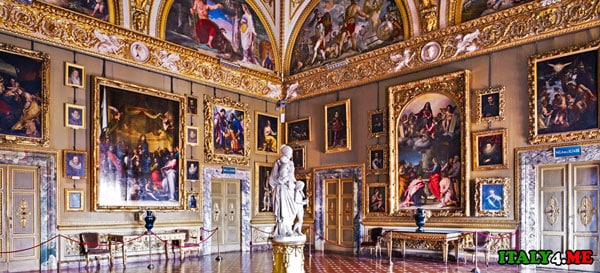
The overall interior of the hall is stunning in its Baroque style, providing an excellent backdrop for the displayed artworks. Gazing at the famous paintings by the masters offers true pleasure.
Gallery of Modern Art
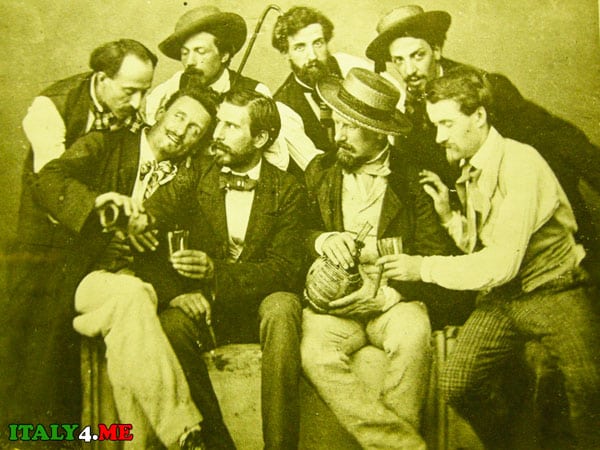
The Gallery of Modern Art houses an exhibition of works by Italian artists from the 19th and 20th centuries. A group of Florentine artists painted pictures using bright patches of various colors. They called themselves “Macchiaioli” (Italian macchiaioli, from macchia – spot).
Silver Museum (Museo degli Argenti)
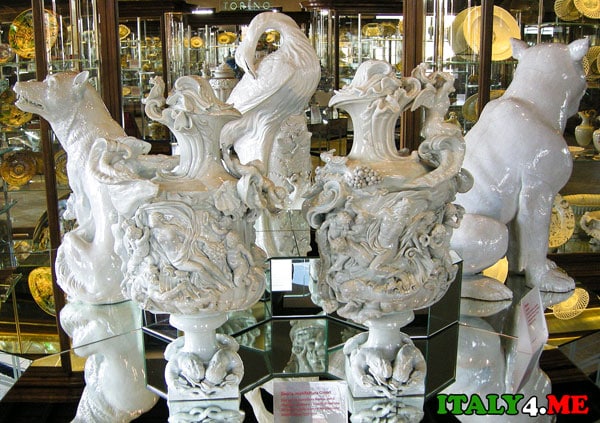
The Silver Museum houses exclusive vases that once belonged to Lorenzo the Magnificent. It also features vases from the Sasanian Empire and amphoras brought from Ancient Rome. The variety of exhibits is astounding, but the main attractions are the gold and silver jewelry and other items. The museum holds a treasure trove of wealth. A highlight is the model of Piazza della Signoria, adorned with precious stones and metals.
Carriage and Costume Museum (Museo delle Carrozze)
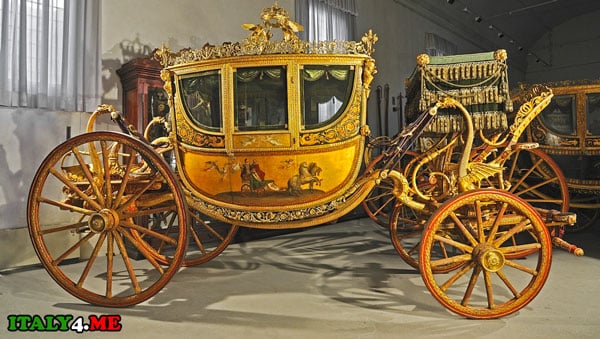
The Carriage Museum showcases various means of transportation, from the earliest wagons without springs to automobiles.
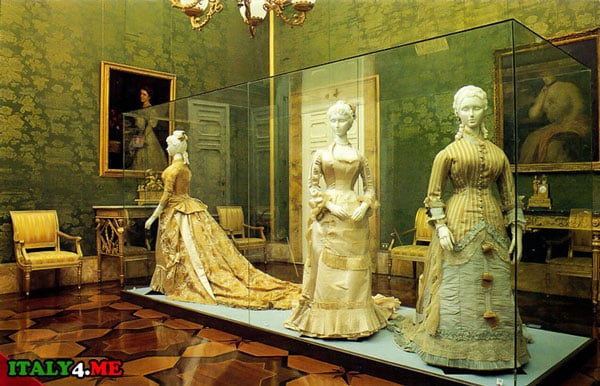
The Meridiana (Small Palace), added to the main building in the 18th century, is home to a costume exhibition. Its display changes every two years. The Costume Museum (Galleria del Costume) houses around 6,000 costumes and accessories from the 16th century onwards.
In the right wing of the palace, you can admire the interiors of the 14-room Royal Apartments.
How to Get There
The Pitti Palace is located on Piazza Pitti, near Palazzo Vecchio. Address: Piazza dei Pitti Firenze, Italia. Buses Nos. 11 and 36 (San Felice stop) can take you there.
Tickets and Hours
There is always a large number of visitors eager to visit the Pitti Palace museums and the Boboli Gardens. However, due to the vast area, you won’t be bumping into other visitors at every turn. But to buy tickets at the museum ticket office without queuing during peak season, you will need a good deal of luck.
The palace is open for visits daily, except Mondays, from 8:15 AM to 6:50 PM. Entry closes at 5:30 PM. The Palatine Gallery alone contains at least 500 paintings, and it takes time, more than an hour, to explore. The same ticket grants access to the Gallery of Modern Art.
To avoid long waits in line, tickets for the Pitti Palace and adjoining gardens can be pre-ordered online. However, the ticket price will include a booking fee, usually €3. After placing your order and paying, you will receive a voucher by email, which you need to print and exchange for a ticket on the day of your visit without waiting in line.
- Official ticket sales website: www.polomuseale.firenze.it
If you have the time, we recommend purchasing tickets for both the palace and gardens simultaneously. A ticket to the Palatine Gallery costs €8.50, and it is also valid for the Gallery of Modern Art. A ticket to the Costume Museum costs €7, and it also grants access to the Silver Museum and Boboli Gardens. The best option is to buy a combined ticket for €12, allowing you to explore all the attractions of Palazzo Pitti and the Boboli Gardens over three days.
Important: Ticket prices may vary during additional exhibitions. Don’t forget about the discount system for eligible categories. More detailed and up-to-date information is always available on the website.
- Official Palazzo website: www.polomuseale.firenze.it/musei/pitti.php?m=palazzopitti
Italians love to say that you can’t understand Italy without visiting Florence. Similarly, it can be said that you can’t fully appreciate the attractions of Florence without visiting Palazzo Pitti and the Boboli Gardens. Take the time to explore this national treasure and symbol of aristocratic power.