 Italy for me From Italy with love


When in Florence, you will undoubtedly immerse yourself in the tourist bustle of this beautiful city. If you want to take a break without interrupting your sightseeing of numerous attractions, visit the Boboli Gardens (Italian: Giardino di Boboli). This unique park, located just behind the Palazzo Pitti, once served as the residence for the Medici family.
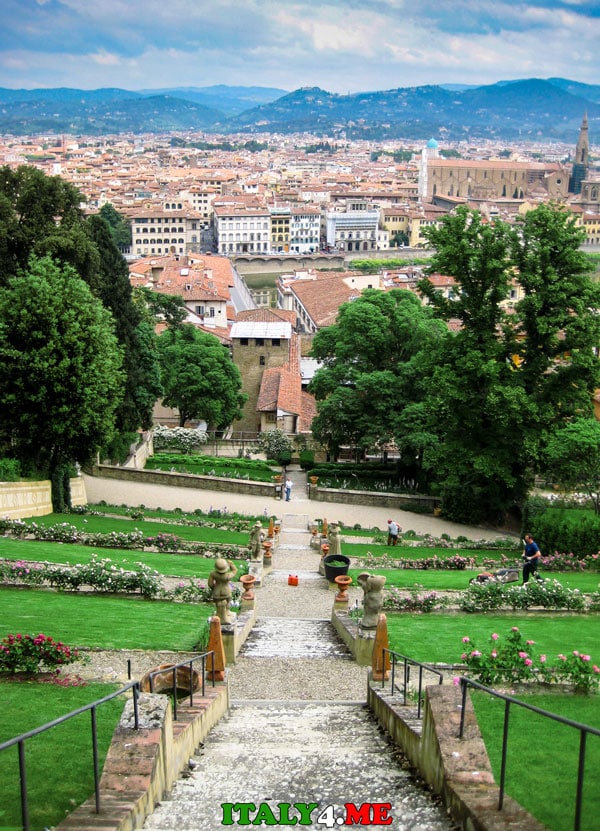
Here, you can enjoy a fantastic view of Florence, admire the sculptural compositions, refresh yourself with the luxurious fountains, and relax in the shade of ancient trees. Today, just as in the past, the park is an excellent place to rest, regardless of the season.
Page Contents
History of Creation
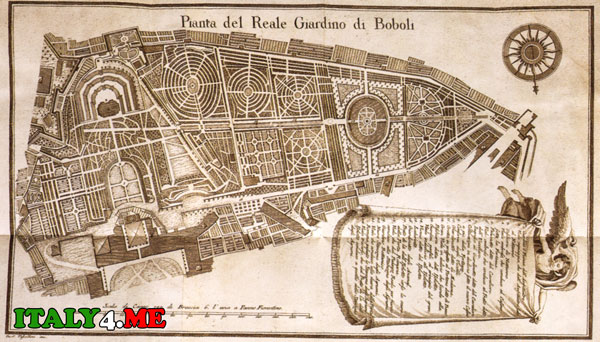
The Boboli Gardens are first mentioned in archival chronicles dating back to the late 16th century. It was during this time that Duke Cosimo I de’ Medici acquired new property in the form of the Pitti Palace. Upon inspecting the acquisition, it was found that a large hill with undeveloped land began behind the palace. The hill’s summit offered a fantastic panoramic view.
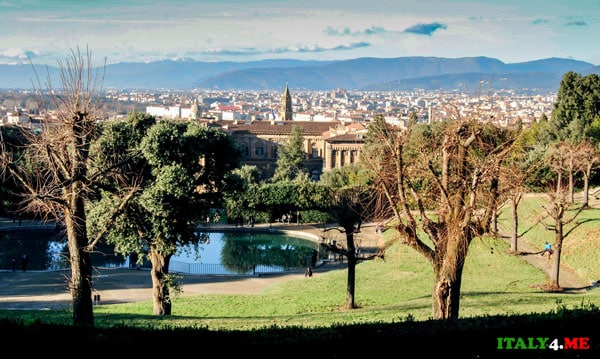
It was then that the Duke’s wife, Eleanor of Toledo, came up with the idea of creating a magnificent park on the hill, which would emphasize the Medici family’s influence and wealth.
Niccolò Tribolo (Niccolò Tribolo) was invited to create the garden masterpiece. However, the famous sculptor did not live to complete his grand creation. His work was continued by Bartolomeo Ammannati (Bartolomeo Ammannati). Other parts of the park were created by Giorgio Vasari, Giulio Parigi (Giulio Parigi), and Alfonso Parigi (Alfonso Parigi).
Bernardo Buontalenti contributed during the reign of Francis I, Cosimo I’s son. Notably, the Boboli Gardens later served as a model for designing many royal gardens in Europe.
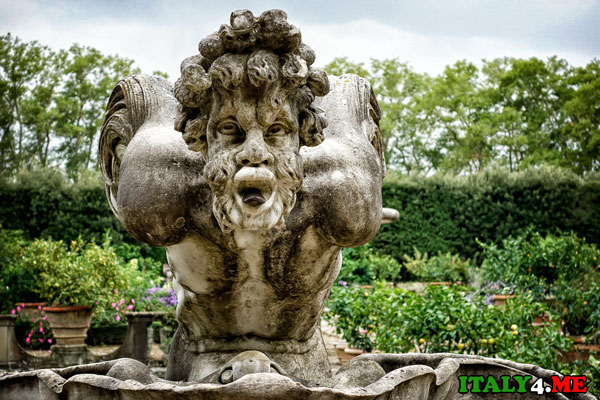
The Medicis constantly expanded and enriched the garden’s territory. Its value and uniqueness were significantly enhanced when extraordinary decorative complexes appeared among the green meadows, winding alleys, and small groves. Thus, an open-air museum gradually formed.
Throughout history, the Boboli Gardens have served as the venue for various events. During the Medici era, it hosted grand receptions and theatrical performances. This park was where opera was first introduced to the public, and later, representatives of all the noble families of Tuscany came to listen to opera performances.
The Gardens Today
The Boboli Gardens have undergone numerous renovations, with each successive owner adding something new to the park’s image, tailoring it to their taste. The park reached its current size of 11 acres (4.5 hectares) in the 17th century. Its gates were opened to the public in 1766.
Today, the Boboli Gardens are an open-air museum of garden art. The museum’s exhibition features samples of garden sculpture from antiquity to the 17th century. It is one of the most elegant gardens in the Italian style.
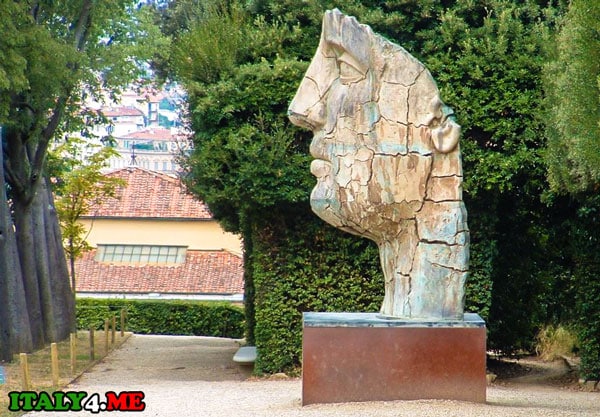
The park is divided into sections by axial alleys and gravel paths, a design standard in the 16th century. The main path, lined with stone oaks and cypresses, begins at the amphitheater and leads directly to the back of the palazzo. In the center of the amphitheater, you can see an obelisk brought from the Medici’s previous residence, which was initially transported from Egypt (Luxor).
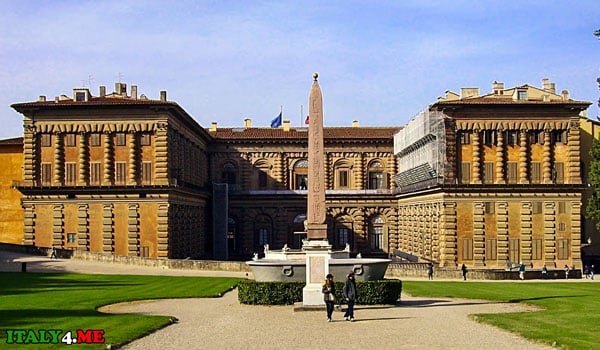
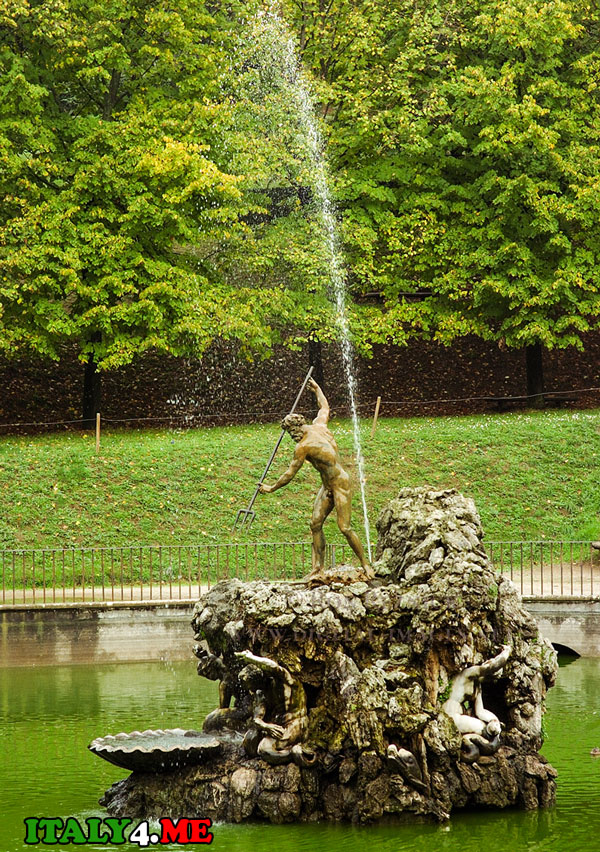
On the gravel path, you will also find the Neptune Fountain, or as locals call it, the “fork fountain.”
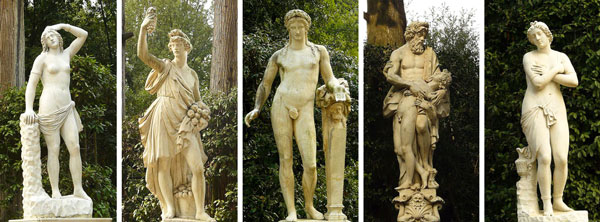
Nearby are several Roman statues. A bit further, a staircase leads up to a hall with muses.
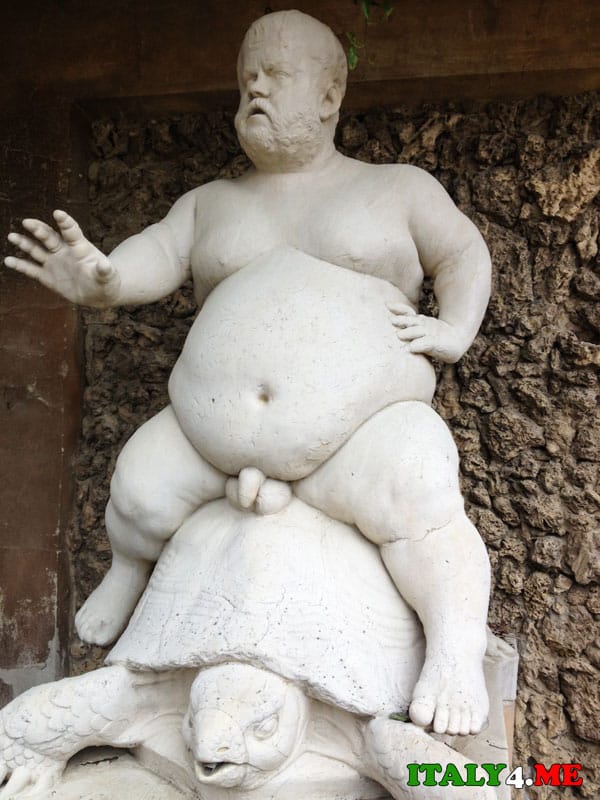
A bit further down, in a hollow, hides a sculptural composition of a dwarf on a turtle, attributed to Valerio Cioli. According to manuscripts, it depicts Pietro Barbino, the Medici court jester. There are always visitors eager to take a photo with it.
The entrance to the Buontalenti Grotto is opposite. It consists of three rooms and resembles a cave with stalagmites and stalactites inside.
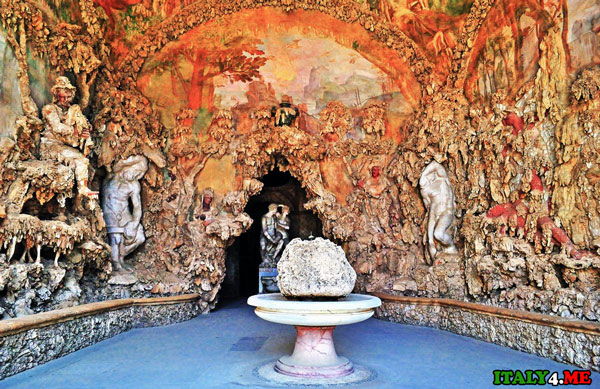
Here you will find a copy of Michelangelo’s famous work “The Prisoners.” Following the path further, you can reach the Jupiter Garden. There, you can rest by the Artichoke Fountain, designed in the shape of an octagon, a small horseshoe-shaped amphitheater, and admire the statue of Jupiter.
One of the many terraces hosts the Knight’s Garden. It attracts visitors with its beautiful view and lovely flowers. For example, peonies bloom profusely in April, and roses in May.
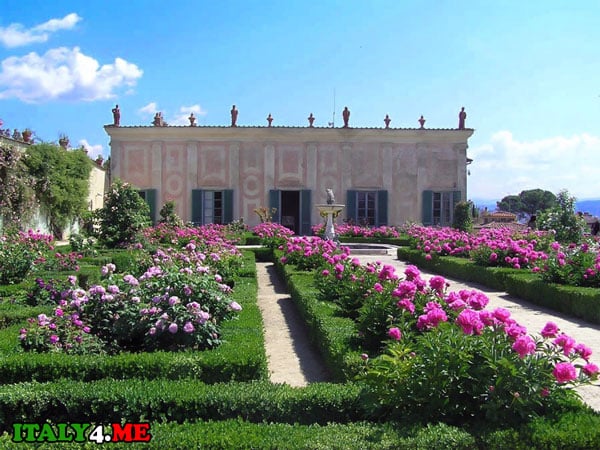
The southern part of the garden can be accessed via an alley lined with ivy and myrtle. Here, away from the center, on a small artificial island called Isolotto, greenhouses with rare old varieties of roses are located. Under the watchful eye of mythological figures Perseus and Andromeda, small citrus trees grow in pots.
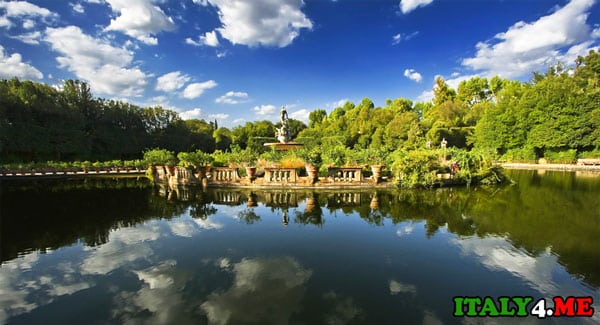
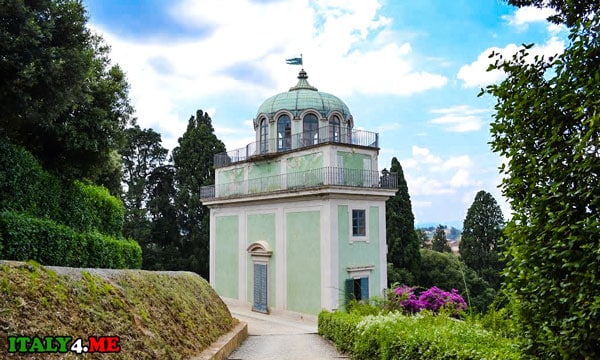
In the northern part of the park, there is a panoramic terrace with an excellent view of the Florentine rooftops. Here you can also see the Coffee House (“Kaffeehaus”), built in the 18th century.
Today, just as in the Medici era, the park often hosts musical and theatrical performances. Although most of the displayed sculptures have been replaced with copies, and the originals are kept in special storerooms, they still hold significant historical value. For example, the “Bathing Venus” and “Paris and Helen” statues.
According to memoirs by the wife of F.M. Dostoevsky, the couple often strolled through the Boboli Gardens during their stay in Italy. Basking in the warm Florentine sun, they admired the blooming roses and dreamed about their future.
How to Get There
The Boboli Gardens are located next to Palazzo Pitti. You can get there by buses No. 11 and 36 (San Felice stop).
Interesting: The travel time by high-speed train to Florence is:
- From Milan – 1 hour 45 minutes;
- From Rome – 1 hour 35 minutes;
- From Bologna – 37 minutes;
- From Pisa – 1 hour.
Hours
Due to its location, this historic site requires constant restoration and maintenance. Therefore, the schedule is designed to allow the staff to maintain the park’s condition. The park is open almost every day, with entry allowed from the opening time until one hour before closing.
- November to February: 8:15 AM to 4:30 PM;
- March: 8:15 AM to 5:30 PM;
- April to May and September to October: 8:15 AM to 6:30 PM;
- October (after the transition to winter time): 8:15 AM to 5:30 PM;
- June to August: 8:15 AM to 7:30 PM.
For maintenance work, the gardens are closed on the first and last Mondays of the month, New Year’s Day, May 1st, and Christmas.
Access to the Buontalenti Grotto is only available with park staff supervision.
- Year-round: 11:00 AM, 1:00 PM, 3:00 PM;
- March: 11:00 AM, 1:00 PM, 3:00 PM, 4:00 PM;
- April to September: 11:00 AM, 1:00 PM, 3:00 PM, 4:00 PM, 5:00 PM.
Tickets
Visitors to the Boboli Gardens must purchase tickets at the entrance, which come in two types. The first type includes a guided tour of Palazzo Pitti itself. The second type allows you to walk through the park and visit some of the palace’s exhibitions (such as the Porcelain Museum and the Costume Gallery). The tickets cost €7 and €10, respectively. Discounts of up to 50% are available for certain visitor categories.
You can find up-to-date information about the park’s hours and ticket prices on the official website: www.uffizi.it/en/boboli-garden
If you get tired of the busy center of Florence, be sure to visit the Boboli Gardens. Enjoy the open space, fresh air, birdsong, and, of course, the city panorama from the hilltop. Once there, you will lose track of time and easily spend the whole day. Since the sale of food and drinks is prohibited in the gardens, make sure to bring some light snacks in advance. This way, you can fully enjoy a great picnic in a historic setting.