 Italy for me From Italy with love


What sights should you see in Positano, the most beautiful town on the Amalfi Coast (La Costiera Amalfitana)?
This cliffside resort town stands out for its nearly vertical layout. Positano is filled with stair-stepped streets that lead down to the sea, often winding through hidden corners not found on tourist maps.
Page Contents
Churches
According to legend, in the 12th century a ship carrying an image of the Byzantine Madonna was sailing past Positano. A sudden storm struck, preventing the crew from continuing. Then a voice from the heavens cried out, “Posa, posa” (“Stay here”).
The ship docked, and the sailors placed the icon in the Church of Saint Vito (no longer standing), Positano’s patron saint, and left it there. That night, the icon mysteriously disappeared and reappeared on the beach. Locals took it as a divine sign and built a church dedicated to the Assumption of the Virgin Mary.
Church of Santa Maria Assunta
There are several versions of how the icon arrived in Positano.
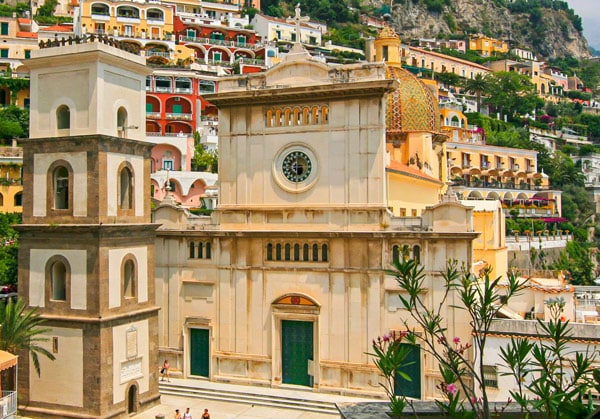
What remains undisputed is that the town’s most important landmark, the Church of Santa Maria Assunta (Chiesa di Santa Maria Assunta), was built in honor of the arrival of the “Black Madonna” (Madonna Nera), an icon that now rests above the church’s main altar.
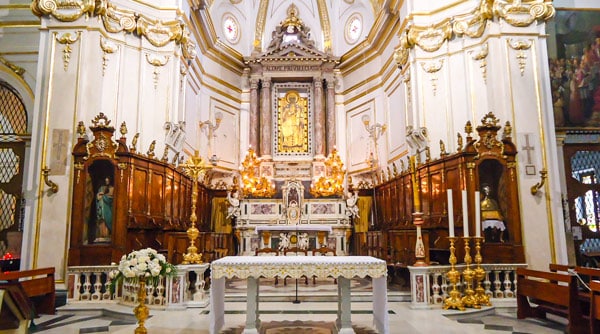
The church we see today is the result of an 18th-century restoration. Above the entrance is a mechanical organ. The interior features three naves separated by five arches. To the right of the altar stands a silver bust of the town’s patron saint, San Vito, crafted by the Venetian school. A little further on is the Chapel of Saint Stephen (Santo Stefano), which houses an 18th-century wooden statue of the Madonna and Child.
- Address: Piazza Flavio Gioia
- Mass: Sunday – 11:00 AM, 7:00 PM; Saturday – 7:00 PM
- Opening hours: 8 AM–12 PM, 4 PM–8 PM
- Official church website: chiesapositano.it
Church of Santa Maria delle Grazie
The main church in the upper part of town is the Church of Santa Maria delle Grazie (Parrocchia di Santa Maria Delle Grazie).
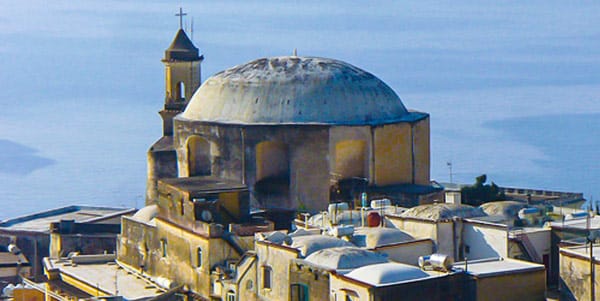
It was built on the site of an 11th-century chapel. The basilica’s distinctive features include its elliptical layout, domed roof, large windows that flood the space with natural light, and an 18th-century majolica tile floor.
- Address: via Chiesa Nuova, 34
- Mass: Sunday – 8:30 AM; Monday to Friday – 6:00 PM
Towers
During the Middle Ages, the coastline was dotted with watchtowers as Saracen pirates frequently raided Positano. Eight towers remain today (five outer and three inner), many of which have been converted into hotels.
Torre Sponda
The medieval Torre Sponda is the oldest tower in Positano.
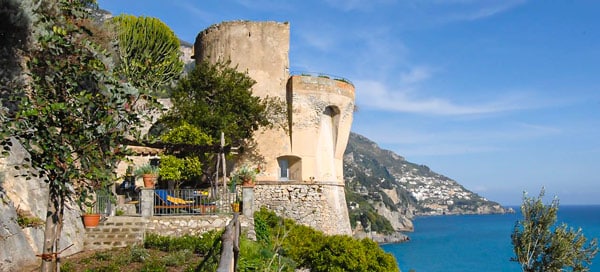
Built in the 13th century in the southern part of the town, it served as a defensive structure until the 19th century. After losing its military purpose, the tower passed into private ownership and is now part of a hotel complex. The building houses a suite suitable for two adults and two children. The terrace offers stunning views of the sea and the town of Positano.
- Address: via Cristoforo Colombo, 54
- Official website: www.torresponda-positano.it
Torre Trasita
On the opposite side of town from Torre Sponda, perched on a rocky cliff, stands Torre Trasita, a 16th-century watchtower.
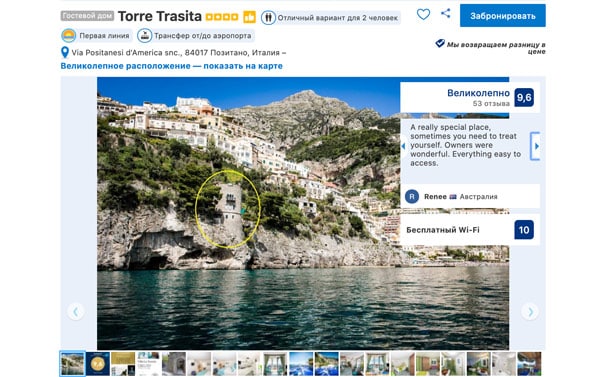
From its walls, you’ll enjoy breathtaking views of the town and surrounding coastline. To reach the tower, follow a narrow pedestrian path that is softly illuminated at night.
The tower is privately owned and now houses a luxury hotel. Room rates start at €800 per night.
- Address: via Positanesi d’America, 3
- Official website: torretrasita.it
Archaeological Museum
As early as the 1st century BC, wealthy Romans built seaside villas along the coast. Remains of these ancient structures are preserved in the Roman Archaeological Museum of Positano (Museo Archeologico Romano di Positano), located beneath the Church of Santa Maria Assunta.
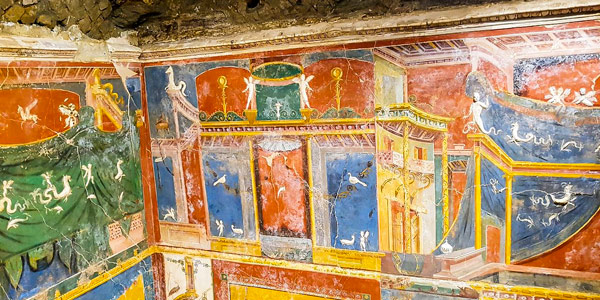
Inside the crypts, visitors can admire frescoes that represent the only known example of Roman villa paintings along the Amalfi Coast.
- Opening hours: November 1 to March 31 – 10 AM to 4 PM; the rest of the year – 9 AM to 9 PM
- Admission: €15. Tickets can be purchased online or at the museum’s ticket office. Payment by credit or debit card only.
- Tour duration: 30 minutes
Palaces
Many villas built between the 17th and 19th centuries have been beautifully preserved. Enterprising locals have transformed them into luxury hotels:
Palazzo Murat
Palazzo Murat, built in the Neapolitan Baroque style, is an 18th-century gem that has retained its historic charm. Today, it houses a luxurious hotel.
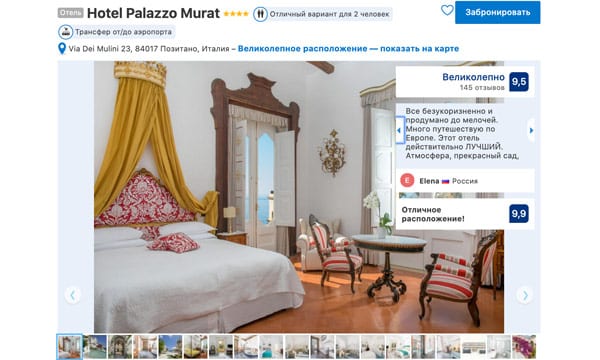
Rooms offer views of the town, sea, or botanical garden. If staying here is outside your budget, you can still visit the courtyard, admire the antique furnishings, or stroll through the gardens. The hotel consistently receives excellent reviews and is highly recommended if it fits your budget.
Website: www.palazzomurat.it
Palazzo Marzoli
The Palazzo Marzoli Resort was built in the 17th century. Recently restored, it now operates as an upscale hotel with all rooms facing the sea. Guest reviews about staying here are quite mixed.
Website: palazzomarzoli.it
Palazzo Santa Croce
Originally a monastery, Palazzo Santa Croce became the residence of a bishop in the 18th century, who restored it in the Baroque style.
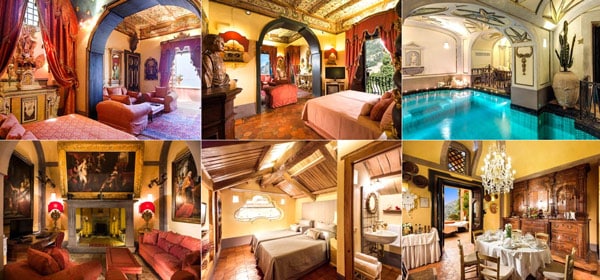
The villa’s doors, frescoed ceilings, and stucco details were crafted by local artisans. Today, it is a boutique hotel with spectacular sea views. With just five bedrooms, the entire palace can also be rented for exclusive use.
- Address: via Stefan Andres, 9
- Website: www.palazzosantacroce.com
Although Positano doesn’t have an overwhelming number of landmarks, it is a fantastic destination for a day trip or an extended stay on the Amalfi Coast.