 Italy for me From Italy with love


Federico Fellini was born on January 20, 1920, to a traveling salesman, Urbano Fellini, and Ida Barbiani. The family lived in Rimini, a small resort town in southern Italy.
Page Contents
Childhood and Youth
As a child, he was frail, and doctors suspected heart failure. Young Federico enjoyed being the center of attention and soon learned to mimic fainting spells and dizziness. He excelled at his Catholic college, loved reading, and devoured books.
His theatrical talent emerged early: he crafted costumes for dolls, wrote scripts, and staged puppet plays. Yet, the streets also captivated him—the tents of traveling circuses, dusty roads, and little shops of Rimini would later become the backdrops of his greatest films.
Fellini’s independent life began in Florence, where he worked as a cartoonist for an anti-fascist newspaper. He later moved to Rome, continuing similar work while also writing scripts and sketches, along with a brief stint studying law—primarily to avoid conscription into Mussolini’s army. His childhood-honed skill of feigning illness also proved useful in this endeavor.
Love and Creativity
The fate of one of cinema’s greatest directors was sealed when he began writing radio scripts about the lives of a couple named Chico and Pauline. Pauline was voiced by radio host Giulietta Masina. Their acquaintance, mutual affection, and brief courtship led to marriage, and the young couple moved into Giulietta’s aunt’s house.
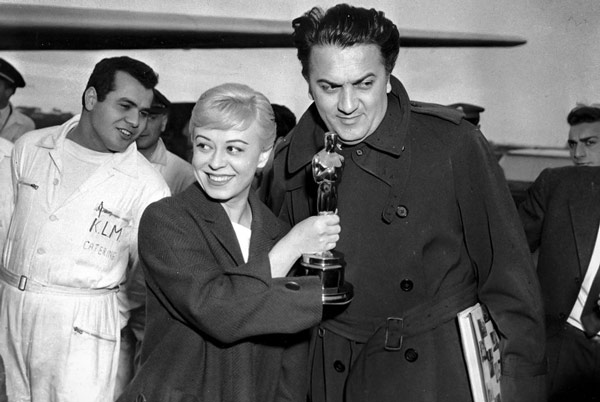
Their married life was happy in every way but one—they were unable to have children. Giulietta’s first pregnancy ended in miscarriage. Their long-awaited son was born in 1945 but died within a month. Later, Fellini suggested adopting a child, but Giulietta declined. From then on, they considered their collaborative films as their children.
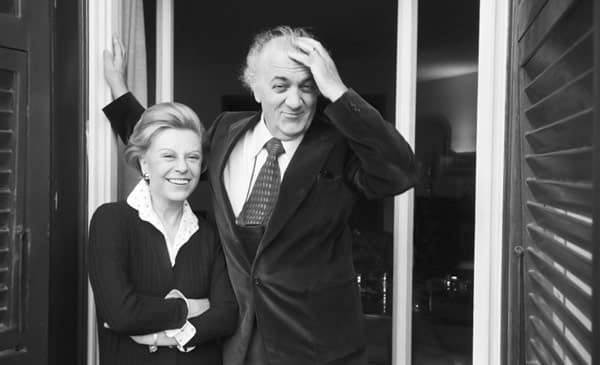
Federico Fellini and Giulietta Masina were an extraordinary couple. She was his inexhaustible source of creative inspiration—the beloved woman, best friend, muse, and incomparable Giulietta. Fellini couldn’t film without his wife by his side, regardless of whether she appeared in the movie. Together, they complemented and completed each other—husband and wife, acclaimed director and actress with unparalleled dramatic talent.
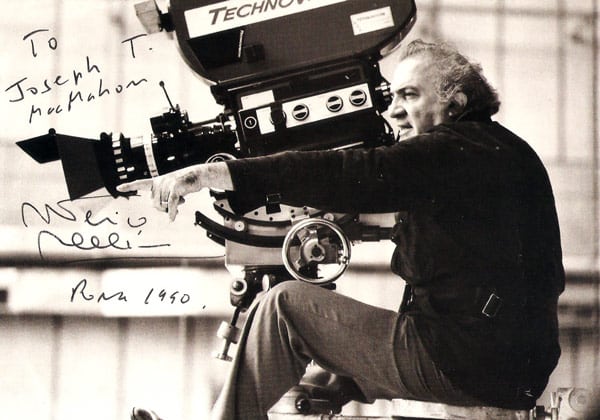
He did not begin directing films immediately, but by the time he started, he had amassed extensive screenwriting experience. Fellini’s films closely mirror the stages of his life. *La Strada* and *Amarcord* reflect his childhood in the Italian provinces. *Nights of Cabiria* features characters he observed while living in a modest apartment near Rome’s train station. *La Dolce Vita* and *8½* represent the peak of his creative powers, yet also stand as poignant testaments that his finest films had already been made.
The Maestro’s Sunset
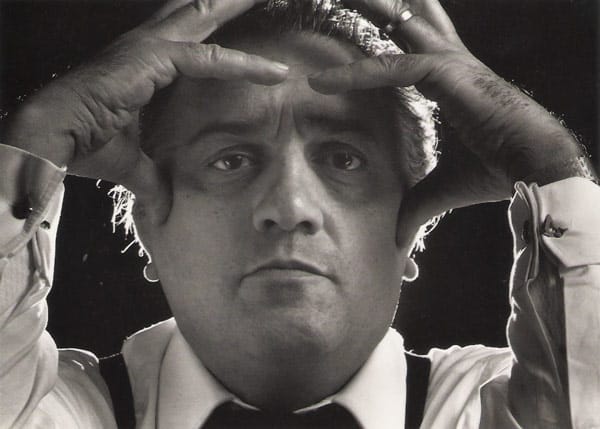
Federico Fellini’s filmography was rich, though he himself was not. He and his wife could hardly be called a fashionable couple—they lived in Rome, not the countryside, spent summers in Rimini, and unlike most famous actresses, Masina owned no expensive jewelry. Yet their life together was filled with emotions that later surfaced in scripts and on screen.
In 1993, Fellini received his fifth Oscar, an honorary award for his contribution to cinema. On October 31 of that same year, he passed away following a stroke. His devoted muse died just five months later, requesting that she be buried holding a photograph of her husband.
The great director was a true son of his homeland. Fellini’s films are infused with emotion and humor, just as Italian cuisine is enriched with cream and spices. Italy honored the maestro posthumously—both the airport and central park in Rimini now bear Federico Fellini’s name.
Filmography
La Strada (1954)
The film *La Strada* marked the first collaboration between Fellini and Masina. The story, centered on circus life, features the strongman Zampanò (Anthony Quinn) and the young gymnast Gelsomina (Giulietta Masina). Released in 1954, the film garnered numerous awards, including the Academy Award for Best Foreign Language Film (1957) and the Silver Lion (1954). It brought Fellini commercial success—and profound depression, which he later called “the Chernobyl of the soul.” *La Strada* catapulted Masina to fame, earning her the nickname “the female Chaplin.”
Nights of Cabiria (Le notti di Cabiria, 1957)
Another collaboration between Fellini and Masina, this time casting his wife as the sentimental and trusting prostitute Cabiria. *Nights of Cabiria* reflects both memories of Fellini’s youth spent in a troubled Roman neighborhood and his effort to portray kindness through sadness and despair, always holding onto hope. The final scene—Cabiria’s smile through tears—remains one of the most powerful moments in world cinema history.
La Dolce Vita (1960)
Fellini’s greatest film, La Dolce Vita, was released in 1960 and marked the start of another brilliant collaboration. The lead role of Marcello, a famous writer and journalist, was played by Marcello Mastroianni. The film is rich in contrasts and layered with deep meaning: biting satire and profound melancholy, the allure of luxury and the burden of excess, the abundance of choice and the inability to choose just one path.
The protagonist drifts from one woman to another, treating each differently, unable to decide who he is or what he wants from life. One of Mastroianni’s co-stars was French actress Anouk Aimée. A profound moral dead end is set against the provocative Roman opulence, all captured with the imaginative brilliance of Fellini. La Dolce Vita provoked outrage from the Vatican, especially for its opening (a statue of Christ transported by helicopter) and a candid striptease scene. Viewers were threatened with excommunication, which only served as excellent free publicity. The film enriched modern language with the term paparazzi and the enduring phrase la dolce vita. Its crowning achievement was winning the Palme d’Or.
8½ (1963)
The film 8½ (1963) echoes La Dolce Vita. It also tells the story of a successful man facing a moral crisis—this time, a film director. Once again, Mastroianni takes the lead, portraying Guido, who must choose between women and confront the sweet life with its bitter disappointments. Unlike La Dolce Vita, however, Guido manages to resolve his struggles, though the ending is not entirely happy. According to Mastroianni, his performance was an attempt to portray Federico Fellini himself. 8½ won both an Oscar and the Grand Prize at the Moscow International Film Festival.
Fellini’s Roma (1972)
Fellini’s Roma was the master’s unique response to the question of how he envisioned the Eternal City. The film is almost documentary in style, yet it is infused with Fellini’s deep affection for the streets and squares of the city that defined his life.
Amarcord (A m’arcòrd, 1973)
The film Amarcord is largely autobiographical. While 8½ reflects Fellini’s maturity, here he revisits his childhood. The title comes from the phrase “I remember,” spoken in the Rimini dialect—the language young Federico was familiar with.
Amarcord became a template for many directors wishing to recreate barefoot childhoods on the big screen. Critics often viewed these imitations as less successful, grumbling that thanks to Fellini, every director seemed to have their own Amarcord. One of the finest homages is Tengiz Abuladze’s film Hevsurian Ballad. Amarcord contains candid scenes of adolescent life, though Soviet director Abuladze had to forgo such content. Like La Strada, Amarcord blends the director’s fantasies with memories from his early years.
Casanova (Il Casanova di Federico Fellini, 1976)
The film Casanova by Federico Fellini was conceived and shot as a fantasy, but it disappointed critics, audiences, and especially Fellini himself. He remarked that Casanova was repulsive and that his memoirs resembled a phone book.
Orchestra Rehearsal (Prova d’Orchestra, 1979)
In Orchestra Rehearsal, Fellini returned to the pseudo-documentary genre. The film takes the form of interviews conducted by a journalist with each member of an orchestra. Orchestra Rehearsal offers an intriguing interpretation of hierarchy in the musical world, where those who best feel the music rise to the top.
And the Ship Sails On (E la Nave Va, 1983)
In And the Ship Sails On, Fellini explored the historical genre. The story unfolds aboard a ship at sea, carrying a group of bohemians and a musical orchestra. The occasion for the voyage is the funeral of an eccentric opera diva, who wished for her ashes to be scattered at sea. Amid the bohemian company and a life that appears luxurious and carefree, news suddenly arrives of Archduke Ferdinand’s assassination. Many critics believe the film is a loose variation on the theme of the Titanic’s demise.
Interesting Facts
- Federico Fellini is the only director in world cinema history to receive five Academy Awards. Four Oscars were awarded to his films La Strada, Nights of Cabiria, La Dolce Vita, and Amarcord in the Best Foreign Language Film category. The fifth was presented to the maestro for his lifetime contribution to the art of cinema.
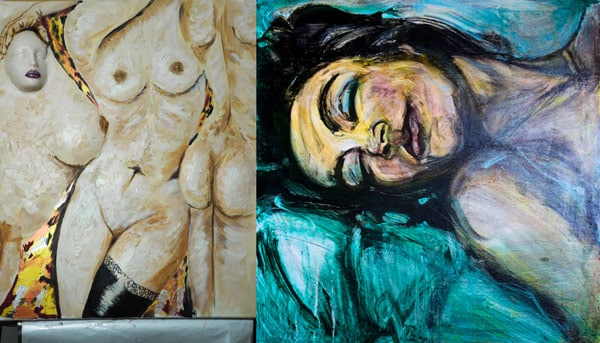
- Even after becoming a renowned director, Fellini never abandoned his love for drawing. His caricatures amazed friends and acquaintances, though the maestro could never understand why people so carefully preserved restaurant napkins bearing his sketches.

The first thing he would do when envisioning a new film was to start drawing voluptuous women. Most of Fellini’s drawings pushed the boundaries of propriety, but the hand of a true master was unmistakable. - The creative quest and moral struggles of the incomparable maestro inspired the Russian band Splean. In 2001, the album Fellini Tour was released—a collaboration between the bands Bi-2 and Splean. These leading figures of Russian rock proved to be discerning cinephiles, incorporating quotes from the film 8½ into their songs.
Books
Several of Fellini’s screenplays were later published as standalone books. These include Amarcord, co-authored with Tonino Guerra, Orchestra Rehearsal, And the Ship Sails On, The White Sheik, and Interview. The maestro, a master of filmmaking, also wrote books on the subject: Making Films, Fellini on Fellini (a collection of interviews and detailed accounts of the making of several films), and My Trick: Directing. The last book was co-written with Charlotte Chandler, an American journalist and film critic who shared a long-standing friendship with Fellini. His autobiography I Remember… was also created with her involvement.
A year after Giulietta Masina’s death, Dutch writer Rosita Steenbeek published the controversial novel The Ways of Love, in which she fabricated a romantic affair with Fellini and described her own Roman dolce vita.
The main premise of the book was that Fellini and Masina did not love each other and that their marriage was merely a partnership between two careerists.
The novel was soon forgotten, as many witnesses to the couple’s life together were still alive. One fact remained true: the Dutch writer had a superficial acquaintance with the couple and even appeared briefly in the film Ginger and Fred.
A romanticized version of Fellini and Masina’s love story was penned by Nikolai Nadezhdin in his 2009 book Federico Fellini: My Giulietta.
In 2015, as part of the series Lives of Remarkable People, the book Fellini was published. Its author, Benito Merlino, a popular composer, screenwriter, and short film director, had personally known Federico Fellini.
Quotes
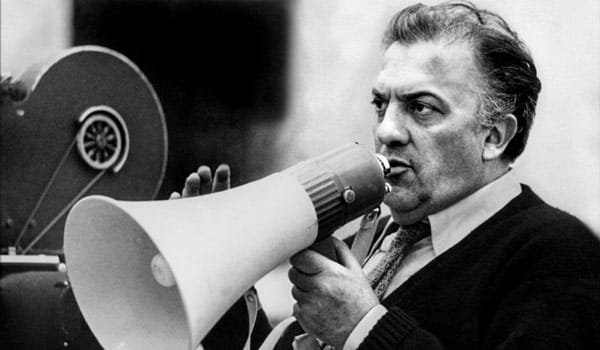
Federico Fellini was a masterful wordsmith. His books, articles, scripts, and statements were marked by a keen sense of style and precise phrasing. Fellini’s quotes form an important part of his creative legacy. His tendency to embellish reflected his sharp intellect and vivid imagination.
Among his most intriguing quotes are those about the circus. Upon first encountering it, Fellini said he “felt that they had been waiting for him there.” This became his path into the world of great art.
Other quotes by the maestro touch on life, human relationships, self-discovery, and art. Fellini, the great dreamer, never lied to himself. His quotes reflect his inner self, his constant creative quest, and his vast life experience:
- All art is autobiographical; the pearl is the autobiography of the oyster.
- You exist only in what you do.
- Making people laugh has always seemed to me the most privileged of all callings, almost like a saint’s vocation.
- A director is like Columbus. He wants to discover America, while the entire crew just wants to go home.
- Censorship is government-sponsored advertising.
- Young people don’t know what they want, but they are determined to get it.
- It’s easier to stay loyal to a restaurant than to a woman.
- People could rid themselves of many illusions if they learned to read what’s written on candy wrappers!
- Nothing great in the world has ever been achieved without passion.
- There is no end. There is no beginning. There is only the passion of life.