 Italy for me From Italy with love


Any traveler, even before setting foot on Italian soil, plans which landmarks they want to visit. Naturally, everyone has their own tastes and preferences, yet some iconic sites simply cannot be missed. One of the signature symbols of Italy in general, and Milan in particular, is the mecca of operatic art — La Scala Theater.
Page Contents
History of the Theater
The history of Teatro La Scala is full of mysteries and incredible twists. Even the name of the theater is not as straightforward as it may seem at first glance. The Italian word “scala” translates to “staircase,” but it was not such a mundane object that inspired its founders.
The theater was built on the site of an ancient Milanese church named Santa Maria della Scala. Dating back to the second half of the 14th century, this church was named after its patroness, Beatrice Regina from the noble Della Scala family.
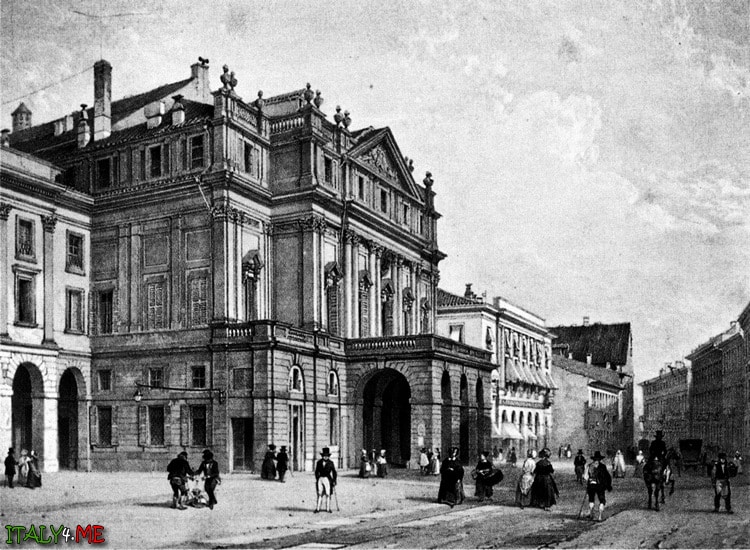
In February 1776, a tragic accident led to a fire that consumed the Royal Ducal Theater. The idea of building a new theater was warmly supported by Empress Maria Theresa of Austria. She was determined for Milan to retain its reputation as the capital of Italian opera.
The architectural project was entrusted to Giuseppe Piermarini, and by mid-1776, construction began on a grand scale. All the work, from clearing the site to the final decorative touches, took two years. Among the outstanding achievements of the esteemed architect and his team were the building’s elegant neoclassical style and a special portal designed for the arrival of horse-drawn carriages. The theater’s stunning acoustics became legendary for generations to come.
Opera Theater
The opera hall was designed in the shape of a grand horseshoe (328 x 125 ft), featuring the classic tiered layout of boxes (five levels and nearly two hundred boxes). Considering that each box could seat up to 10 guests, the theater’s overall capacity was truly impressive.
The strict exterior of the theater building accentuated the richness and beauty of its interior décor. The light and warm golden tones of the decoration were striking in their elegance.
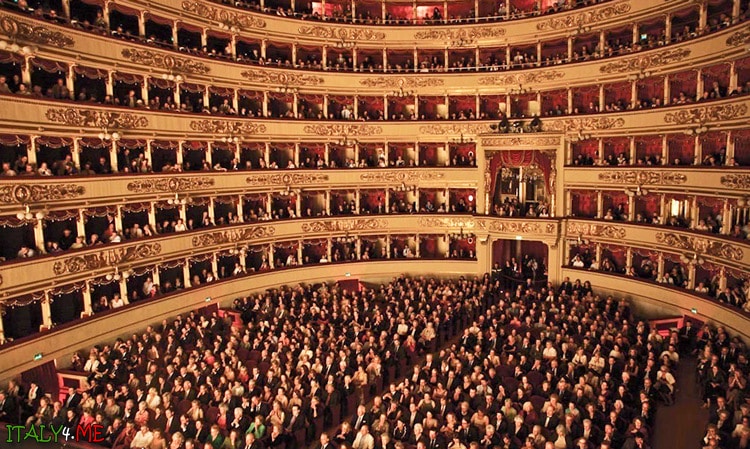
Meanwhile, the theater’s interior spaces offered a range of entertainments for its fashionable guests, including gaming rooms and refreshment bars.
The most distinguished families of Italy, driven by their love for the theater, invested a considerable sum—about one million lire—to create La Scala.
To further please regular patrons, the venue hosted not only chamber performances but also extravagant events like bullfights and grand card parties. In essence, the theater became the center of Italy’s social and cultural life.
La Scala’s path to fame began on August 3, 1778. The grand opening was celebrated with a premiere of the opera “Europa riconosciuta” (Europe Revealed). Antonio Salieri composed the work specifically for this important occasion in the European theatrical world. Following the opera, several ballet performances were staged. A consistently full house showed that the public, regardless of class or rank, warmly embraced the new theater.
The very term “opera house” implied the presence of a permanent troupe, opera singers, its own orchestra, conductor, and, of course, a director.
Since opera was at the heart of Teatro La Scala, its active schedule was divided into several seasons—spring, summer, autumn, and the Carnival season. The first three featured serious productions, while the Carnival season mixed lighter plots with theatrical performances and ballet.
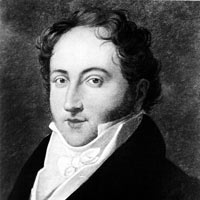
In the early 19th century, much of La Scala’s repertoire was composed by the great master of bel canto, Rossini. He popularized intricate vocal techniques and the opera seria (serious opera). Rossini’s debut at La Scala was marked by the opera “The Trial by Stone.” Over the next 13 years, the theater staged works such as “Aureliano in Palmira,” “The Lady of the Lake,” “The Turk in Italy,” “Cinderella,” “The Barber of Seville,” and “Otello.”
Starting in 1822, the theater’s repertoire expanded with works by Bellini and Donizetti. Productions featured famous opera divas such as Maria Malibran, Giuditta Pasta, and the Grisi sisters. The collaboration between these composers and brilliant performers ensured that every new production was a success. Until 1850, La Scala dazzled audiences with opera seria and opera buffa masterpieces like Donizetti’s “Anna Bolena,” “Lucrezia Borgia,” “La Favorite,” “Linda di Chamounix,” and “La Fille du Régiment,” as well as Bellini’s finest works, including “The Capulets and the Montagues,” “La Sonnambula,” “Beatrice di Tenda,” and “I Puritani.”
In its heyday, the splendor of Italian opera and the lavish social events at La Scala captivated the English poet Lord Byron, the French writer Stendhal, and left a lasting impression on the Russian composer Mikhail Glinka. Glinka’s acquaintance with Bellini and Donizetti profoundly influenced his musical views, helping him mature into a master composer. Later, Glinka would create some of his greatest works in the Italian style.
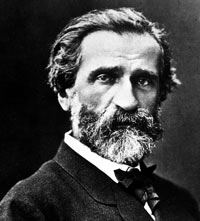
With the arrival of virtuoso Italian composer Giuseppe Verdi at La Scala, Italian opera became the country’s—and even Europe’s—dominant art form. Beyond providing aesthetic pleasure, Verdi’s works carried an emotional call for national unity and liberation from the rule of the Austro-Hungarian Empire. Although he cleverly disguised revolutionary fervor within historical narratives, Verdi earned the title “Maestro of the Revolution.” His masterpieces include “Joan of Arc,” “Oberto,” “Nabucco,” and “Falstaff.” Verdi’s music had a profound impact, transforming the essence of the theater. Light-hearted entertainment was replaced with fiery oratory, as audiences listened intently to the patriotic spirit of a true Italian hero.
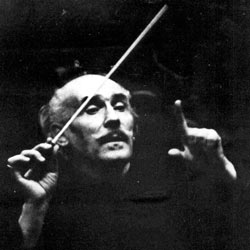 The arrival of the young Arturo Toscanini at La Scala was both an incredible stroke of luck and destiny. The former conductor of the theater’s orchestra had failed to meet the expectations of the noble audience and was disgracefully dismissed. Toscanini, despite being only 20 years old, had already gained fame for his performance of “Aida.” Charismatic and dynamic, Toscanini quickly won the hearts of even the most discerning theatergoers.
Arturo Toscanini became both conductor and artistic director of the opera house, marking the beginning of major changes at La Scala. The maestro’s energetic reforms touched every aspect of the theater, from the way the curtain was lifted—not vertically but drawn sideways—to the mandatory check-in of hats to ensure an unobstructed view for patrons seated in the rear rows of the stalls.
Drawing from Giuseppe Verdi’s artistic legacy, Toscanini continually worked to refresh the theater’s repertoire. It was he who first introduced works by Richard Wagner to La Scala. He also greatly expanded the orchestra’s repertoire to include symphonic pieces. However, conflicts with the new Italian government, aligned with national-socialist views, eventually forced Toscanini to leave La Scala and move to the United States.
As political tensions intensified across Europe, Italy was not spared. In 1943, during World War II, the famed opera house La Scala was destroyed. Yet the company continued rehearsing and performing in other venues under harsh wartime conditions. Even abroad, Toscanini remained deeply concerned for his beloved theater.
In 1945, after Italy’s liberation, Toscanini contacted the city authorities of Milan and sent them one million lire to help rebuild the theater.
Like a phoenix rising from the ashes, La Scala reopened in 1946, rekindling Italians’ love for opera and zest for life. Naturally, Arturo Toscanini returned as the theater’s commanding force and strict genius. Post-war hardships affected the company’s roster, but in the following years, La Scala became a powerhouse of theatrical talent.
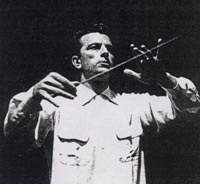 In 1948, Guido Cantelli made his debut as a conductor at the opera house. His vibrant conducting style, passion, and undeniable talent were recognized and praised by Toscanini. Not yet 20 years old, Cantelli organized a series of opera performances based on works by Wagner and Verdi and gave a number of joint concerts with other esteemed maestros, including Herbert von Karajan, Dimitri Mitropoulos, and Bruno Walter.
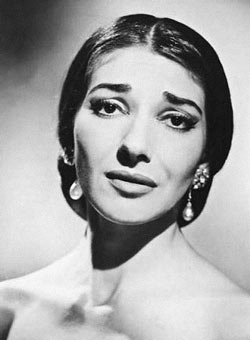 Beyond the dramas written by composers, real-life passions also ignited on La Scala’s stage as two of the greatest opera divas of the 20th century, Maria Callas and Renata Tebaldi, battled for the title of prima donna. Callas’s difficult personality made her unpopular among the company members, but her stunning artistry won the favor of directors. In 1955, Maria Callas performed the leading role in Verdi’s “La Traviata” at La Scala. Directed by Luchino Visconti, this production transformed Callas into the goddess of opera and the face of La Scala.
In early 1957, Arturo Toscanini passed away—a man who had done so much for La Scala. Until 1965, the conductor’s position saw many changes, but no one remained in the role for long. Claudio Abbado, who made his conducting debut at the Milanese opera house, brought a fresh, compelling approach and demonstrated great potential. His successful productions included “The Barber of Seville,” “The Italian Girl in Algiers,” “Cinderella,” “Macbeth,” “Simon Boccanegra,” and more. In 1972, Abbado became La Scala’s principal conductor. During his tenure, the theater staged numerous symphonic concerts and ballet performances, featuring both Italian and international stars.
Artists Who Performed at La Scala
In the second half of the 20th century, the cradle of opera sought to become more accessible to the public. The walls of La Scala hosted world opera stars such as Enrico Caruso, Plácido Domingo, Montserrat Caballé, and Luciano Pavarotti, as well as renowned Russian voices like Fyodor Chaliapin, Tamara Milashkina, Leonid Sobinov, ballet dancer Svetlana Zakharova, and ballet star Rudolf Nureyev. Meanwhile, the theater troupe regularly toured across Europe, the United States, and Canada.
The Modern Appearance of La Scala
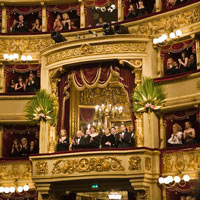
In the post-war years, Teatro della Scala underwent several reconstructions. The most recent began in 2001, led by architect Mario Botta, and lasted until 2004. The main stage was redesigned to accommodate up to three productions simultaneously. Besides construction and interior restoration, the total number of audience seats was reduced. Modern fire safety requirements now allow seating for 2,030 guests. The horseshoe-shaped auditorium extends along the royal box, the stalls, and five tiers of boxes. True opera enthusiasts often prefer seating in the galleries, where they believe the acoustics are the finest.
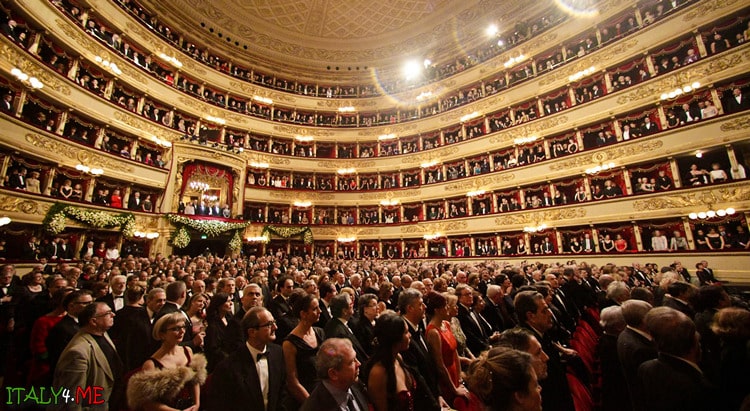
Today, as centuries ago, the La Scala opera season traditionally begins on December 7, the feast day of Saint Ambrose, the patron saint of Milan. Through winter until June, the theater becomes a temple of opera. In the fall, the Philharmonic Orchestra, founded in 1982, takes center stage with symphonic concerts. The theater also boasts its own choir and ballet company.
Repertoire
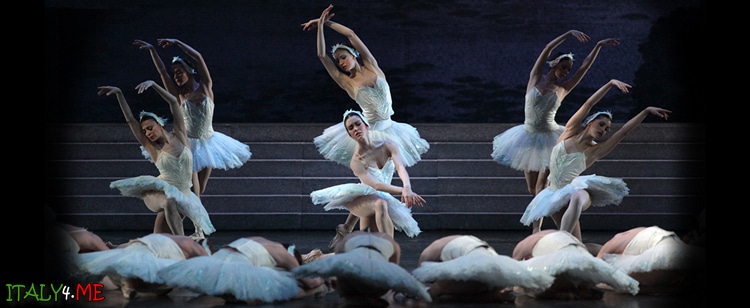
La Scala’s modern repertoire caters to a wide range of tastes, featuring works by classic composers such as Verdi, Wagner, Puccini, Bellini, Rossini, Gounod, Tchaikovsky, Mussorgsky, and Donizetti. Nevertheless, contemporary trends and alternative interpretations of famous operas are regularly included in the lineup.
Ticket Prices and Booking
Ticket prices at La Scala range from €29 to several hundred euros. Seats with the best views are considerably more expensive. The most coveted spots are in the stalls, the gallery, and the front rows of the boxes.
Opening night is the most spectacular and highly anticipated event, and witnessing it requires a significant financial commitment. Tickets can be booked via the official online system or purchased directly in Milan. However, tickets to La Scala are highly sought after, so securing them in advance is strongly recommended.
Theater Address
La Scala Theater Address: Via Filodrammatici, 2.
Nearest Milan Metro Station: Dante Cordusio.
Official website of La Scala Theater in English: www.teatroallascala.org
La Scala Museum
It is worth noting that La Scala also houses a museum filled with beautiful, fascinating, and wonderful items directly related to the theater’s history. The museum’s walls are adorned with portraits of famous opera divas.
One particularly popular exhibit is the painting of Giuditta Pasta as Anna Bolena, created by Karl Bryullov. The collection also includes busts of prominent composers, Giuseppe Verdi’s death mask, set models from notable productions, and other memorable artifacts. Admission to the La Scala Museum costs €12.
Nearby Attractions
A leisurely stroll from the theater, along a mosaic-adorned alley, leads to the piazza where the magnificent Milan Cathedral Duomo stands. This Gothic masterpiece amazes visitors with its pointed spires and richly detailed façade.
Another noteworthy nearby attraction is the monument to the legendary Italian inventor, artist, and scholar, Leonardo da Vinci.